16 November 2026FWDC 2026 · Cité Univ. · Paris
Analytics that builds the platform: say goodbye to Ticketing 2.0 with agents in the git repo
SpeakerPaul Marcombes · Head of Data Platform
RoomGulbenkian · 10:30 → 11:00
Forward Data Conference · 16 November 2026
What if your
business teams built
the data platform?
Lessons from Optic 2000: how 25 contributors, most of them business users, build the data platform.
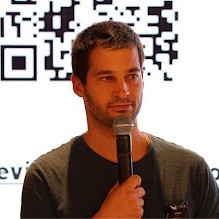
Paul Marcombes
Head of Data Platform, Optic 2000 · Founder of Unytics
The conversational paradox
Everyone wants to talk to their data
Why are sales down in the West region this month?
The drop is concentrated in the last two weeks.
Paul Marcombes · Forward Data Conference 2026
2
The conversational paradox
Under the hood, context makes the answer
Cold start
21 %
correct answers, plugged straight into the warehouse
With context
95 %
with a senior team curating the context
One month later
65 %
a month later, without maintaining the context
“You need a village of analysts to make self-service work.”
Olga Berezovsky, Data Analysis Journal
Figures: Anthropic Data team’s write-up, June 2026
3
The conversational paradox
Mid-analysis, a piece of data is missing
Option 1
Hack it on your own
An export, an Excel file, a query in a sandbox.
Shadow data: nothing makes it back into the platform
Option 2
Open a ticket and wait
The data team prepares the column, the table or the measure. Later.
Ticketing 2.0: the data team is still the bottleneck
Paul Marcombes · Forward Data Conference 2026
4
The conversational paradox
At Optic 2000, everything changes at once
10 months
to rebuild the entire data platform
6 → 4
people in the platform team
Legacy PostgreSQL stack replaced
Paul Marcombes · Forward Data Conference 2026
5
The conversational paradox
The market puts conversation at the end
Conversational AI
to consume
→
→
Semantic layer
measures, dimensions
→
Paul Marcombes · Forward Data Conference 2026
6
The conversational paradox
We put it at the start
Conversational AI
to build, in the code editor
→
→
Semantic layer
measures, dimensions
→
Business teams build, within the frame set by the platform team
Analysis builds the platform.
Paul Marcombes · Forward Data Conference 2026
7
Agenda
How we got there
A2
Business users become builders
Six pillars of an
AI-ready platform
Paul Marcombes · Forward Data Conference 2026
8
A1 · The end of silos
“Letting non-developers
code in the data platform
repo?”
I was the first sceptic. So we started with the team closest to us: our BI team.
Paul Marcombes · Forward Data Conference 2026
9
A1 · The end of silos
Before: three teams, three silos
4
Data Engineers
Ingestion and transformations, in PostgreSQL stored procedures
2
BI Engineers
Semantic layer, in MicroStrategy
4
BI
Dashboards built
point-and-click
The BI team could read a bit of SQL. They had never touched Git, Python or dbt.
Paul Marcombes · Forward Data Conference 2026
10
A1 · The end of silos
The test: talk instead of click
After MicroStrategy
Tableau: tedious point-and-click dashboards
→
The test
Streamlit apps vibe-coded in the repo, with AI
Autonomous
on Streamlit, within weeks
Ten times better
for end users, in a fraction of the time spent on Tableau
All the way to dbt
they create and maintain their own models
Paul Marcombes · Forward Data Conference 2026
11
A1 · The end of silos
Today: two teams instead of three
4
Data Engineers
The platform, the frame, the coaching
4
BI
The whole chain, end to end
dbt models
→
Semantic layer
→
Streamlit apps
Streamlit has become our dashboarding tool, all the way to thousands of users in stores.
Paul Marcombes · Forward Data Conference 2026
12
A2 · Business users become builders
Why stop
at the BI team?
At headquarters, other teams track their numbers every day.
Paul Marcombes · Forward Data Conference 2026
13
A2 · Business users become builders
We went to the business teams at headquarters
Business project managers
Management control
Finance
Accounting
Marketing digital
Analytical profiles, who track their numbers every day.
None of them had ever written a line of code.
Paul Marcombes · Forward Data Conference 2026
14
A2 · Business users become builders
The barrier to entry is close to zero
Writing code
Reading code
Typing Git commands
They converse.
In VS Code, or directly in Claude Desktop.
A business project manager, logistics side
Pull the logistics data from SAP, clean it up following our conventions, and build me a dashboard tracking the logistics teams’ KPIs.
Done: the data lands in Snowflake, the dbt models follow the conventions, the dashboard is ready. The pull request is open.
SAP source
dbt models
Streamlit app
Pull request
Paul Marcombes · Forward Data Conference 2026
15
A2 · Business users become builders
It all starts with a small topic
A project manager builds an app to track her Jira tickets.
Nothing strategic. But that’s how trust builds up.
Paul Marcombes · Forward Data Conference 2026
16
A2 · Business users become builders
Then the topics become critical
The owner of the store master data built his own cockpit.
Before
Our dbt tests failed, then we let him know.
Today
He sees everything, in more detail, and gets ahead of issues.
My master data cockpit
1 inconsistency
Previous owner
New owner
The opening dates overlap
Paul Marcombes · Forward Data Conference 2026
17
A2 · Business users become builders
From 4 to 25 contributors in ten months
people contribute to the data repo.
None of them codes by hand.
Paul Marcombes · Forward Data Conference 2026
18
A3 · Beyond the dashboard
More contributors
means more ideas.
We thought Streamlit would be used to display charts.
Business teams had other plans.
Paul Marcombes · Forward Data Conference 2026
19
A3 · Beyond the dashboard
First trend: replacing SaaS tools
Geomarketing
Catchment and franchise areas, rebuilt in Streamlit
The tool finally meets 100% of the needs of the person who built it.
One costly license fewer
Tax returns
Automatic reading, validated by a human
No more manual re-entry every year. No external OCR software.
Same quality
Paul Marcombes · Forward Data Conference 2026
20
A3 · Beyond the dashboard
Second trend: elevating the back-ends
SAP · Salesforce
unfriendly interfaces
→
→
Re-entry
repetitive, error-prone
SAP · Salesforce
robust back-ends
↔
Streamlit front-end
tailor-made, vibe-coded
↔
The business user
sees and acts
A dashboard shows. A data app acts.
Paul Marcombes · Forward Data Conference 2026
21
Agenda
How we got there
A2
Business users become builders
Six pillars of an
AI-ready platform
Paul Marcombes · Forward Data Conference 2026
22
B · Why it holds
“Great on paper.
But twenty business users coding
in the data platform?
That’s chaos, guaranteed.”
— Half of this room, right now
And they are right.
Code nobody maintains
Security risks
Costly rollbacks
Paul Marcombes · Forward Data Conference 2026
23
B · Why it holds
An AI-ready platform, in six pillars
The agent has nothing to guess
B1
A single repo
The whole platform, from source to screen.
B2
Boring contributions
One way to do each thing, with no plumbing to write.
B3
Standard building blocks
In the apps, AI assembles: it invents nothing.
B4
A single definition
One concept, one name, defined in one place.
A correction is only made once
B5
Review by agents
The pull request opens already reviewed and cleaned up.
B6
A learning loop
Every review comment becomes a rule.
Paul Marcombes · Forward Data Conference 2026
24
B1 · A single repo
The whole platform lives in a single repo
Git mono-repo
Ingestion
sources, loading
→
→
Semantic layer
measures, dimensions
→
One conversation, one pull request: from source to screen
Paul Marcombes · Forward Data Conference 2026
25
B2 · Boring contributions
Configuration on one side, plumbing on the other
Configuration
What the business needs
Written by contributors and their agents.
source.yml
function.py
model.sql
Plumbing
How it’s deployed
Written once, by the platform team.
Deployment
Security
Monitoring
What a contribution cannot express, a reviewer doesn’t have to check.
Paul Marcombes · Forward Data Conference 2026
26
B2 · Boring contributions
A function: three lines of configuration
functions.yml
get_crm:
schedule: cron(0 4 * * ? *)
timeout: 600
memory: 2048
→
The platform infers
AWS Lambda
10 minutes: under the 15-minute limit
Same Python script. Same decorator.
No “backend” field to declare.
Paul Marcombes · Forward Data Conference 2026
27
B2 · Boring contributions
A function: three lines of configuration
functions.yml
get_crm:
schedule: cron(0 4 * * ? *)
timeout: 3600
memory: 2048
→
The platform infers
ECS Fargate
1 hour: beyond a Lambda’s limit
Same Python script. Same decorator.
No “backend” field to declare.
In your platform, how many lines of plumbing does it take to add a source?
Paul Marcombes · Forward Data Conference 2026
28
B2 · Boring contributions
One way to do each thing
→
→
The thirtieth source looks like the twenty-ninth.
The agent copies the previous one, and it’s right to.
Paul Marcombes · Forward Data Conference 2026
29
B3 · Standard building blocks
In the apps, AI assembles building blocks
Standard components
Cards, tables, charts: a library built by the BI team, enforced by the skills.
Semantic layer
Measures are defined once. The app calls and displays them.
Paul Marcombes · Forward Data Conference 2026
30
B4 · A single definition
Three names for one concept
email
stg_crm__contacts
“Contact email”
email_client
dim_clients
“Customer email address, lowercase”
customer_email
exp_clients_newsletter
“Cleaned customer email”
Which one is right? And which one will the agent copy?
Paul Marcombes · Forward Data Conference 2026
31
B4 · A single definition
One concept, one name, one definition
email_client
Customer email address
Written once, in the business dictionary.
0
columns described in dbt
Paul Marcombes · Forward Data Conference 2026
32
B5 · Review by agents
The machine checks before the reviewer
On write
The agent codes with all our skills.
On save
A hook checks every column against the dictionary.
Before it opens
The PR skill runs the dbt and Streamlit reviews until all is green.
When it opens
Everything is clean. Only what our rules didn’t foresee gets through.
One question is left for the human:
is this the right thing to build?
Paul Marcombes · Forward Data Conference 2026
33
B6 · A learning loop
Every review comment becomes a rule
A human comments on a pull request
→
“Why did the AI let this through?”
The skill is updated, right away
The next pull request passes first time
←
The platform learns from every review
Paul Marcombes · Forward Data Conference 2026
34
Agenda
How we got there
A2
Business users become builders
Six pillars of an
AI-ready platform
Paul Marcombes · Forward Data Conference 2026
35
C1 · Builders and consumers
Should everyone
be in VS Code?
Absolutely not. We also do conversational AI, for those who consume.
Paul Marcombes · Forward Data Conference 2026
36
C1 · Builders and consumers
Two populations, two faces of AI
At headquarters
Analytical profiles
Management control, finance, marketing, project managers…
They build.
In the repo, with a coding agent.
In stores
Thousands of users
Opticians, store managers.
They consume.
Served like customers, with no code editor.
Paul Marcombes · Forward Data Conference 2026
37
C1 · Builders and consumers
In stores, AI is consumed in two ways
In the app
An embedded expert agent
The store manager reads the store’s financial statement, and discusses it with an agent specialised in optical retail finance.
In their own AI
An MCP server and skills
Stores query their governed data from their own Claude or ChatGPT.
Semantic layer
The same numbers everywhere. Everyone sees only their own scope.
Paul Marcombes · Forward Data Conference 2026
38
C1 · Builders and consumers
We moved the boundary
Platformers
build the platform
Builders
build on top of it
The data team
Business teams
The boundary
The platform team
Business teams at HQ
with the BI team
The stores
As many people as possible on the builders’ side.
Paul Marcombes · Forward Data Conference 2026
39
C1 · Builders and consumers
A trend bigger than our case
Product teams
The ticket codes itself
Created in Linear from Slack, coded by an agent when it’s simple.
Marketing and GTM
Their own repo
Teams that had never coded now have one of their own.
Every team
In each other’s repos
Product, marketing, data: everyone opens pull requests in the others’ repos.
Everywhere, the same slope:
the repo becomes the whole company’s workshop.
Paul Marcombes · Forward Data Conference 2026
40
C2 · The human shift
To conclude,
two messages.
Start small. And bet on people.
Paul Marcombes · Forward Data Conference 2026
41
C2 · The human shift
First message: start small, and iterate
Don’t open your repo to a hundred business users on Monday morning.
1
Your BI team
or your analysts: those closest to you
2
A willing business user
on a low-stakes topic
3
One guardrail per review
every comment strengthens the frame
4
Critical topics
once trust is in place
Paul Marcombes · Forward Data Conference 2026
42
C2 · The human shift
Second message: the key is human
1 in 4
One data engineer in four coaches business users, full time.
The BI team’s job is changing
Yesterday
Answering tickets,
point-and-click
Today
Helping business teams rethink their processes
Paul Marcombes · Forward Data Conference 2026
43
C2 · The human shift
The village of analysts
already exists.
It’s your business teams.
In your company, who could become a builder tomorrow?
Paul Marcombes · Forward Data Conference 2026
44
Thank you.
Paul Marcombes
Head of Data Platform, Optic 2000 · Founder of Unytics

unytics.io/blog
Scan to connect on LinkedIn
The details, in four articles
Nobody Codes by Hand
One Name, One Definition
Boringly Simple
Your business teams shouldn’t just be AI consumers